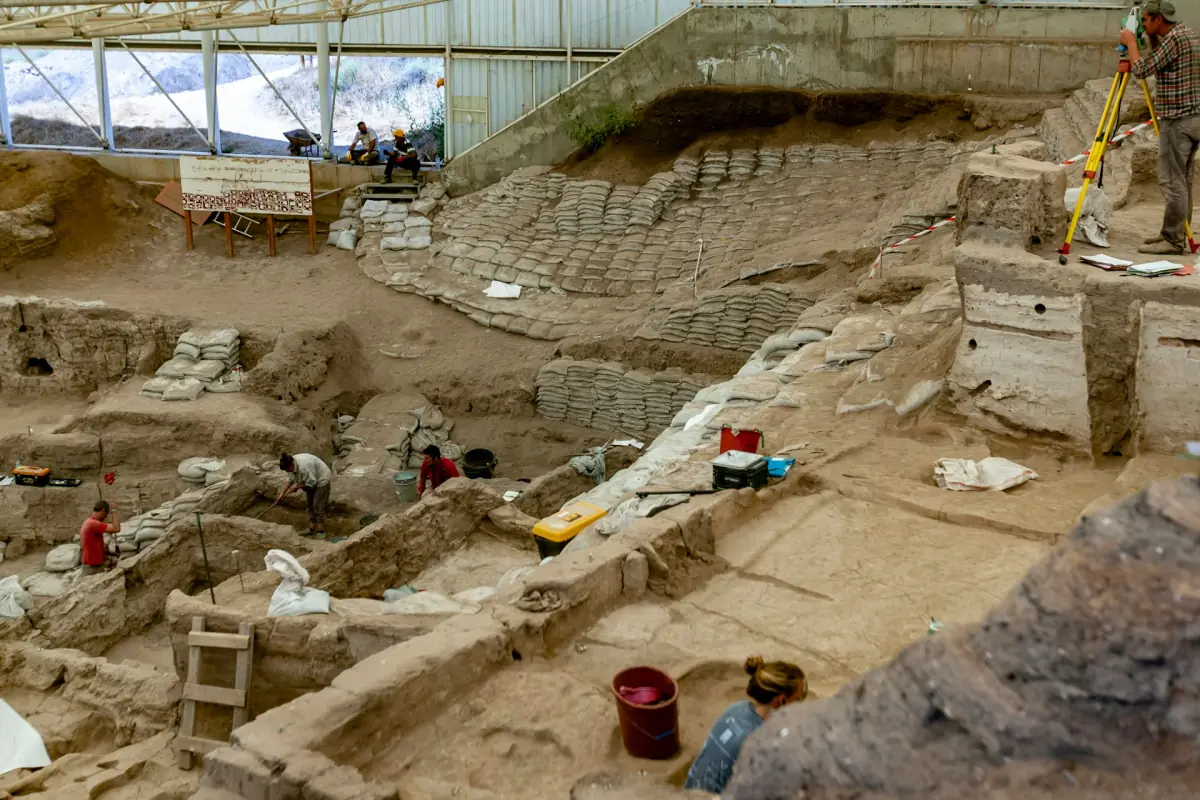
Lepenski Vir at the Iron Gates
Lepenski Vir is an archaeological site and museum beside the Danube at Boljetin, near Donji Milanovac. The covered excavation lets visitors see house plans within the settlement layout. The finds also give a view of life around those buildings, from fishing and toolmaking to burial rituals and stone sculpture.
Choose the archaeology circuit if you want a guided visit and admission included. A route pairing Lepenski Vir with Golubac suits visitors dividing their time between the excavation and the fortress, and the route via Captain’s Misha Hill adds a stop on higher ground.

Trips to Lepenski Vir
For a guided archaeological day with lunch, choose the heritage route. The other trips also visit Lepenski Vir with a guide or as part of the itinerary.
Hand-picked tours, booked through GetYourGuide and Viator. Prices are indicative starting prices in euros (as of November 2026). Tap a tour for live availability and the current price in your currency.

Lepenski Vir and Danube views
- Visit to Lepenski Vir archaeological site
- Visit to Golubac Fortress
- Scenic views of the Danube River
Pickup is listed; confirm its location when checking availability.
Check availability →
Danube heritage sites with lunch
- Lepenski Vir guided tour and entrance fee
- Viminacium guided tour and entrance fee
- Lunch near Golubac Fortress
Meet at the listed bicycle rental and tour office. The route also includes a guided visit and entry at Smederevo.
Check availability →
Lepenski Vir and Captain’s Misha Hill
- English-speaking guide
- Air-conditioned vehicle
- Bottled water
The itinerary names Lepenski Vir and Captain’s Misha Hill.
Check availability →Guided visits to Lepenski Vir
Compare the archaeology day with guiding and entry at Lepenski Vir, the combined visit to Golubac and the excavation, and the route via Captain’s Misha Hill.
History of the Danube Gorge at the Iron Gates
The Iron Gates bring together evidence of early river settlements, Roman roadbuilding and the changes brought by the Đerdap I reservoir. Finds at Lepenski Vir show how people settled beside the Danube long before the Roman road. On the Serbian bank, Trajan’s Tablet commemorates a section of that road completed in AD 100.
The Đerdap I project prompted rescue excavations at Lepenski Vir before the water rose. Elsewhere along the gorge, Trajan’s Tablet and a piece of the Roman road were moved higher in 1969. The two sites are easiest to understand in different settings. At Lepenski Vir you can look down at the settlement plans, while a boat trip with the tablet on its itinerary gives a view of the inscription from the river.
The archaeological site and museum in Boljetin
Lepenski Vir lies beside the Danube at Boljetin, 15 km from Donji Milanovac according to the local tourism office. Use the riverside road or EuroVelo 6 to plan an independent visit. The guide to getting to the gorge helps place Boljetin in the wider route from Belgrade. For a group or school visit, arrange the details with the museum.
Houses, burials and sculptures
Lepenski Vir’s planned buildings, burials and stone sculptures offer several ways to read the settlement. Start with the house plans and their relationship to one another. Then look at what the finds reveal about daily work along the river, including fish catching and tools made of bone and antler. The burials and stone carvings add evidence about rituals and artistic work.
The National Museum dates its Lepenski Vir collection to the 10th to 6th millennia BC, encompassing Mesolithic and Neolithic phases. The local account places a group of settlement remains and buildings around 6500 to 5500 BC. Those dates describe the buildings in that account. The museum’s collection covers a broader period.
Visiting Lepenski Vir with or without a guide
Lepenski Vir can be the focus of a museum visit on your own or one stop on a guided day along the Danube. For an independent visit, check the museum’s opening times and admission for your date. The archaeology day trip from Belgrade includes the entrance ticket and a guided visit at Lepenski Vir alongside Smederevo Fortress, Viminacium and Golubac. Another itinerary visits Lepenski Vir and Golubac, and the route via Captain’s Misha Hill pairs the site with a hill stop. Compare the ticket coverage when choosing between those routes.
Questions about Lepenski Vir
How old are the Lepenski Vir finds?
The 10th to 6th millennia BC are the range given for the National Museum’s Lepenski Vir collection. The collection spans Mesolithic and Neolithic phases. The local account dates a set of settlement remains to around 6500 to 5500 BC, a narrower period relevant to those buildings.
Which itinerary includes admission and a guided visit?
The archaeology circuit from Belgrade includes both admission and a guided visit at Lepenski Vir. It starts in Čumićevo sokače and also takes in Smederevo Fortress, Roman Viminacium and Golubac. The itinerary includes lunch near Golubac and a same-day return to Belgrade.
What should I look for inside the excavation?
The house plans at Lepenski Vir show how the buildings sat within the settlement. Use them to get your bearings before looking at evidence of fishing and tools made from bone and antler. The burials and stone sculpture give a different perspective on life beside the Danube.